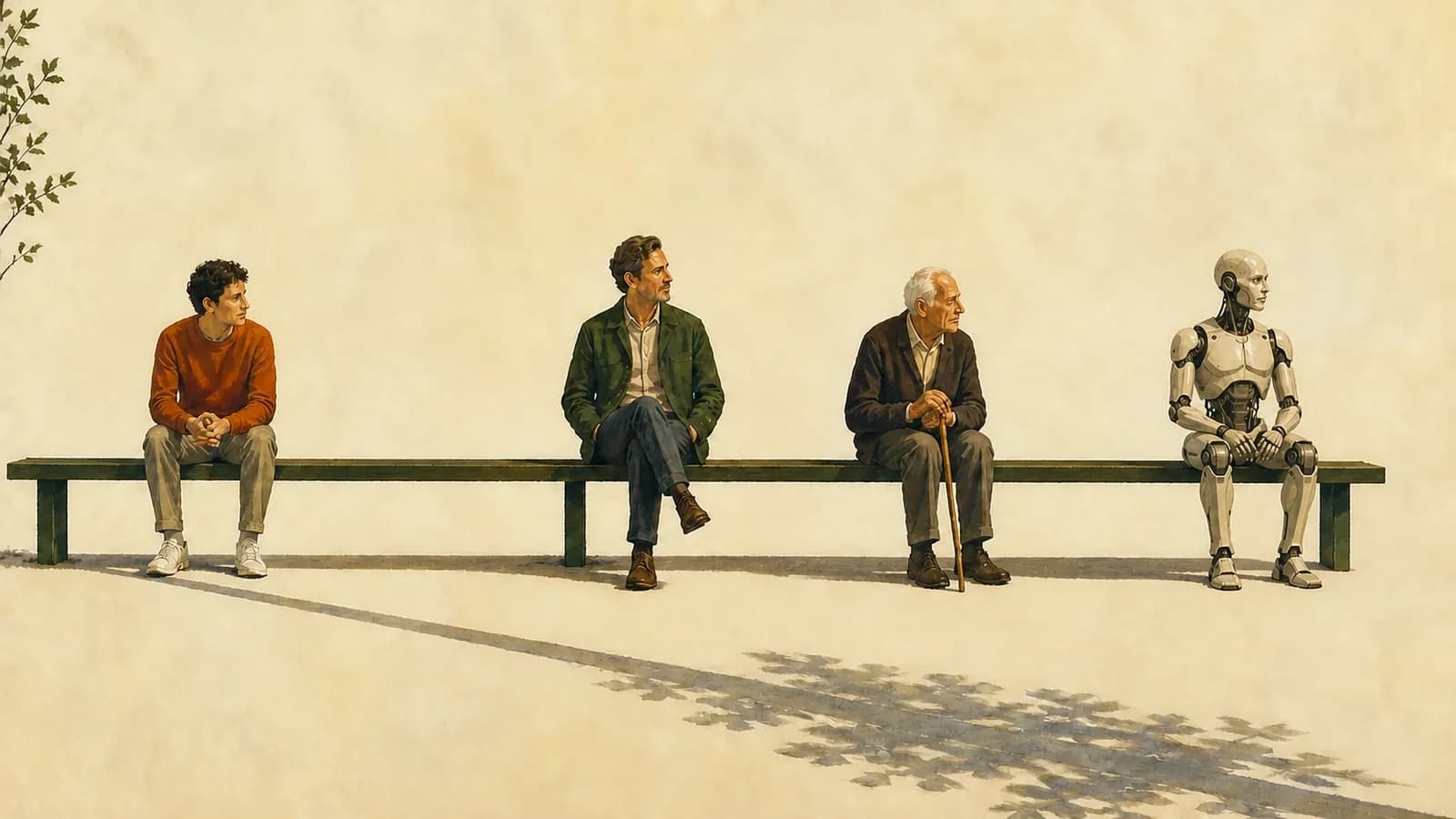
The longevity people think we are going to live a very long time. Not immortality, not yet, but lifespan extension that would make a 175-year-old unremarkable. Peter Attia, David Sinclair, Bryan Johnson with his blood transfusions and 200 daily supplements. They might be wrong. But they might be right, or partly right, and if they are, certain things follow that nobody seems to want to talk about.
Here is one of them: Female fertility has a biological clock. Male fertility does not, or not in the same way. This asymmetry exists now, but it is compressed into a lifespan where it matters less than you might think. A woman who goes through menopause at 50 has perhaps 30 or 35 years of life remaining. That is a lot, but it is not a different order of magnitude from the fertile years that preceded it.
Now stretch the lifespan to 175 and leave the fertility window where it is. Menopause still arrives around 50. A woman now has 125 years of post-fertile life ahead of her. She was fertile for maybe 30 years, from her late teens to her late forties. That means roughly 17% of her life was spent with the option of biological children. The remaining 83% is spent without it.
For men, nothing like this happens. Male fertility degrades with age, sperm quality declines, but there is no hard cutoff. A man at 90 can still father a child. A man at 110 can still father a child. The window does not close.
What does this mean?
I keep turning over the implications and none of them are comfortable.
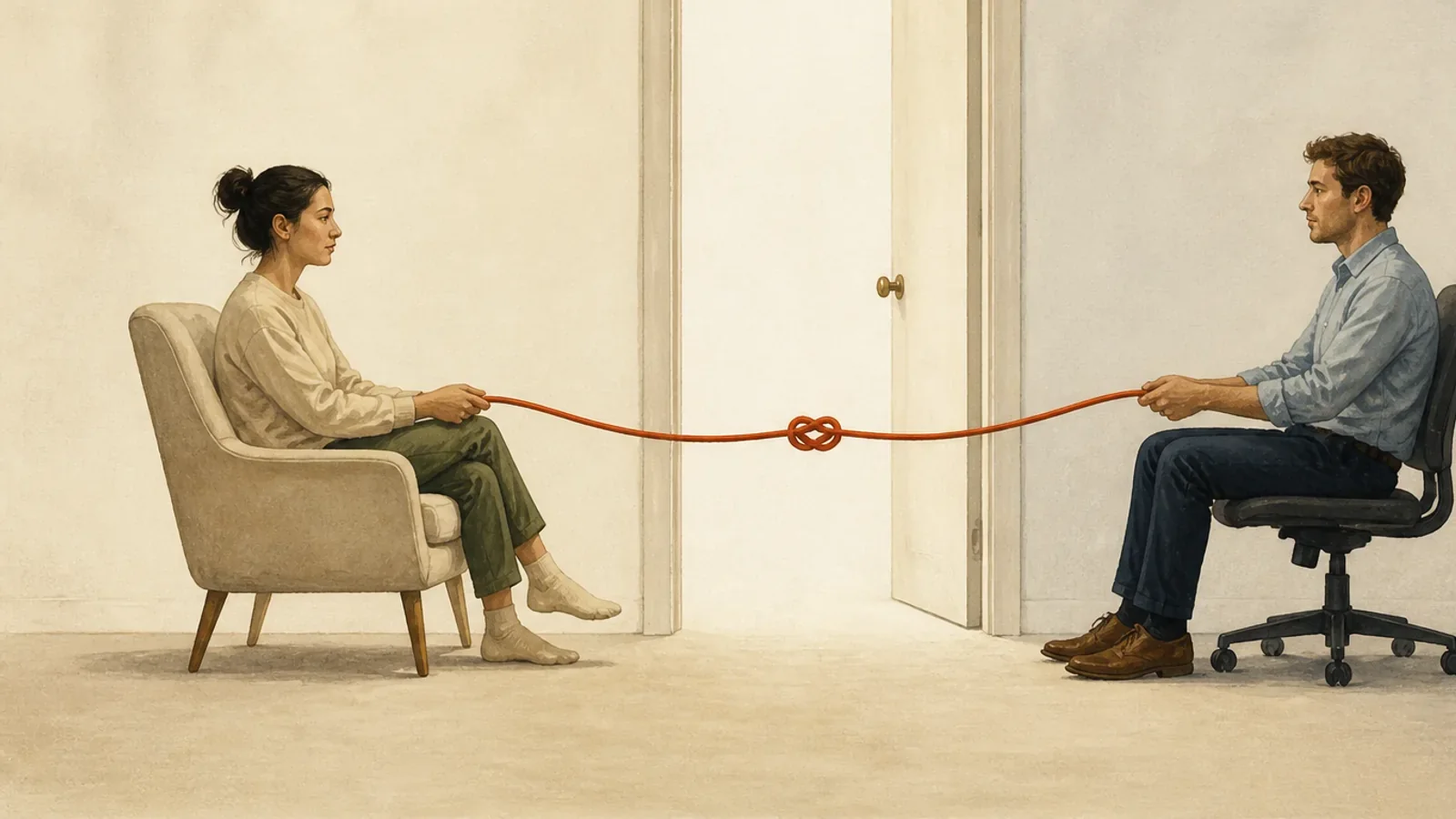
The first is about partnership and its duration. Marriage was designed, insofar as it was designed at all, for lifespans of 40 or 50 or 60 years. "Till death do us part" meant something different when death was likely to arrive before you got truly sick of each other. Now extend the commitment to 150 years. That is longer than the entire history of the United States as a country. That is longer than the gap between Napoleon and the iPhone. Expecting two people to remain compatible across that span seems, at minimum, optimistic.
So probably we get serial monogamy as the norm rather than the exception. You have different partners for different phases of life. Maybe your first marriage is your childbearing marriage, the one where you have kids and raise them. This happens in your thirties and forties, because the fertility window hasn't changed. Then that marriage ends, amicably or not, and you enter some other configuration. Your adventure years. Your career years. Your late-life companionship years. Each phase might last 30 or 40 years, which is itself longer than most marriages last now.
But here is where the asymmetry bites. A man leaving his childbearing marriage at 55 can, if he wants, start another family. A woman leaving her childbearing marriage at 55 cannot. She has 120 years of life ahead of her, but the biological children question is closed. If she wanted more children and didn't have them, that window is gone forever. If she is content with the children she had, fine. But the optionality is different. The man at 55 has kept his options open in a way the woman at 55 has not.
The second implication is about age gaps in relationships.
Right now, a 30-year age gap is scandalous, or at least noteworthy. A 60-year-old man with a 30-year-old woman raises eyebrows. Part of the discomfort is about power dynamics, about what each person is getting from the arrangement. Part of it is about the remaining lifespan: the older partner will likely die while the younger one still has decades left.
But if everyone lives to 175, a 30-year age gap shrinks in relative terms. A 90-year-old man and a 60-year-old woman both have 80-plus years ahead of them. The gap that seemed vast when lifespans were 75 years becomes a rounding error when lifespans are 175.
And yet. If that 90-year-old man is seeking a 35-year-old woman specifically because she can still bear him children, while his 87-year-old ex-wife from his second marriage has another 90 years of life ahead of her but no fertility, something strange is happening. The asymmetry that was always present becomes more visible, more extended, more structurally embedded in how relationships form.
You could imagine a pattern emerging: Men cycling through partners, starting new families every few decades if they choose, accumulating children and descendants across a 150-year reproductive career. Women having a compressed window of fertility followed by a vast expanse of post-fertile life, watching as men their own age partner with women decades younger.
This sounds dystopian when I write it out. Maybe it wouldn't play out that way. Maybe social norms would adjust. Maybe the post-fertile years would become the valued years, the years of wisdom and accomplishment, and the fertility window would be seen as a brief, almost adolescent phase. Maybe artificial wombs or other technologies would close the gap entirely and make biological fertility irrelevant.
But the longevity discourse rarely engages with any of this. The longevity people talk about healthspan and avoiding chronic disease and staying cognitively sharp at 140. They do not talk about what happens to mating and marriage and family when the basic biological asymmetries remain in place but the timescales stretch by a factor of two or three.
The third implication is about wealth and power accumulation.
Compound interest is powerful. A person who works and invests for 40 years can accumulate a lot. A person who works and invests for 150 years can accumulate an almost unimaginable amount. The math is simple and brutal: more years of earning, more years of compounding, more wealth at the end.
Now consider who gets those extra working years without interruption. Men, historically and still today, have more continuous workforce participation. Women take time out for pregnancy, for childbearing, for childcare in the early years. These gaps, even when relatively short, compound over time into significant differences in lifetime earnings and wealth accumulation.
Extend the working life to 150 years and the question becomes: Does the fertility window matter more or less? On one hand, a five-year career interruption matters less when you have 145 years of career to spread it across. On the other hand, the person who never takes the interruption, who starts working at 22 and never stops until 170, accumulates relentlessly while others are pausing to raise children.
And if it is primarily women who pause, and primarily men who don't, then the wealth gap between men and women might grow over a 150-year horizon rather than shrink. The woman who took ten years out of the workforce to raise children has lost ten years of compounding. The man who didn't take that time has an extra decade of investment returns. Multiply that difference across 150 years and you get a chasm.
Unless, of course, the social structures change. Unless men take equal time off for childcare. Unless the fertility window becomes something both partners navigate together rather than a burden that falls primarily on women. But social structures are sticky, and biological realities are stickier, and I am not sure that 175-year lifespans would automatically produce more egalitarian outcomes. They might produce less.
The fourth implication is about generations and family structure.
Right now, you might know your great-grandparents if you're lucky. Four generations alive at once is not unheard of but it's not common either. The generational turnover keeps families manageable in size and complexity.
At 175-year lifespans, you could easily have seven or eight generations alive simultaneously. Your great-great-great-great-grandmother is still around, 170 years old, matriarch of a family with thousands of members. You have half-siblings from your father's fifth marriage who are 80 years younger than you. Your own children from your first marriage are now older than your current spouse's parents.
The family tree becomes something more like a family forest, dense and tangled and impossible to navigate. Holidays become logistically complex. Inheritance becomes a nightmare. The simple question of "who is your family" becomes genuinely difficult to answer.
And this is before you factor in the asymmetry. If men can keep starting families across a 150-year span, a single man could have children with ten or fifteen different women, producing half-sibling cohorts spread across more than a century. The Genghis Khan scenario becomes more available to any man who wants it and has the resources to support it.
The fifth implication is about identity, specifically female identity, across a post-fertile lifespan of 125 years.
Motherhood has been, for most of human history, central to how many women understood themselves and their place in the world. This is not a statement about how things should be. It is a statement about how things have been. The role of mother was not just a biological fact but a social identity, a set of relationships and responsibilities that structured a woman's life.
In a normal lifespan, the post-fertile years are the minority. You might spend 30 years raising children and 30 years after the children are grown. The identity of "mother" carries through the whole span because the span is short enough that the role remains salient. Your children are still alive. Your grandchildren are being born. The relational web that motherhood creates remains active.
Now extend the post-fertile years to 125. Your children are still alive, yes, but so are your great-great-great-grandchildren. You are so far removed from the daily reality of child-rearing that it happened in what feels like a different lifetime. Because it was a different lifetime, really. A century ago. A century during which you have been many other things, done many other things, become many other selves.
What fills that time? What identities replace or supplement or overshadow the identity of mother?
This could be framed as a loss. The thing that gave meaning to life is now a small slice of a much larger whole, diluted by sheer duration.
Or it could be framed as a liberation. Women would have 125 years to be something other than mothers, to pursue work and art and adventure and whatever else they want, unburdened by fertility, unburdened by the expectation that their value is tied to their reproductive capacity.
I genuinely do not know which framing is correct. Probably both are correct for different women. But the longevity discourse does not engage with this at all. It talks about adding years to life as if the years are neutral containers that can be filled with whatever you like. It does not talk about what those years feel like, what they mean, how they restructure identity and relationship and purpose.
The longevity people are optimists. They believe that living longer is straightforwardly good, that more life is better than less life, that the problems created by longevity are soluble through technology or social innovation or sheer human adaptability.
Maybe they are right. Humans have adapted to many things. We adapted to agriculture, to cities, to industrialization, to the internet. We could adapt to 175-year lifespans. We could figure out how to structure marriages and families and careers and identities across that span. We could close the fertility gap through technology or redefine its importance through culture.
But adaptation is not free and it is not automatic. It requires confronting the actual shape of the problems, not just waving them away with the assumption that we'll figure it out. And the actual shape of the longevity problem includes this deep asymmetry between male and female fertility, an asymmetry that most longevity advocates either ignore or assume away.
I do not know what happens if they're right and we live to 175. I suspect nobody does. But I think we should be talking about it more honestly than we are, which means talking about the parts that are uncomfortable, the parts that involve sex and power and bodies and time.
The biological clock does not care about supplements. The biological clock does not care about your healthspan optimization protocol. The biological clock keeps ticking even if you're going to live another 130 years after it stops.
What do we do with that? I don't know. But I think we should at least be asking.